

Green Man
A visual research project dedicated to phytomorphic figures in Romania
FIELD RESEARCH
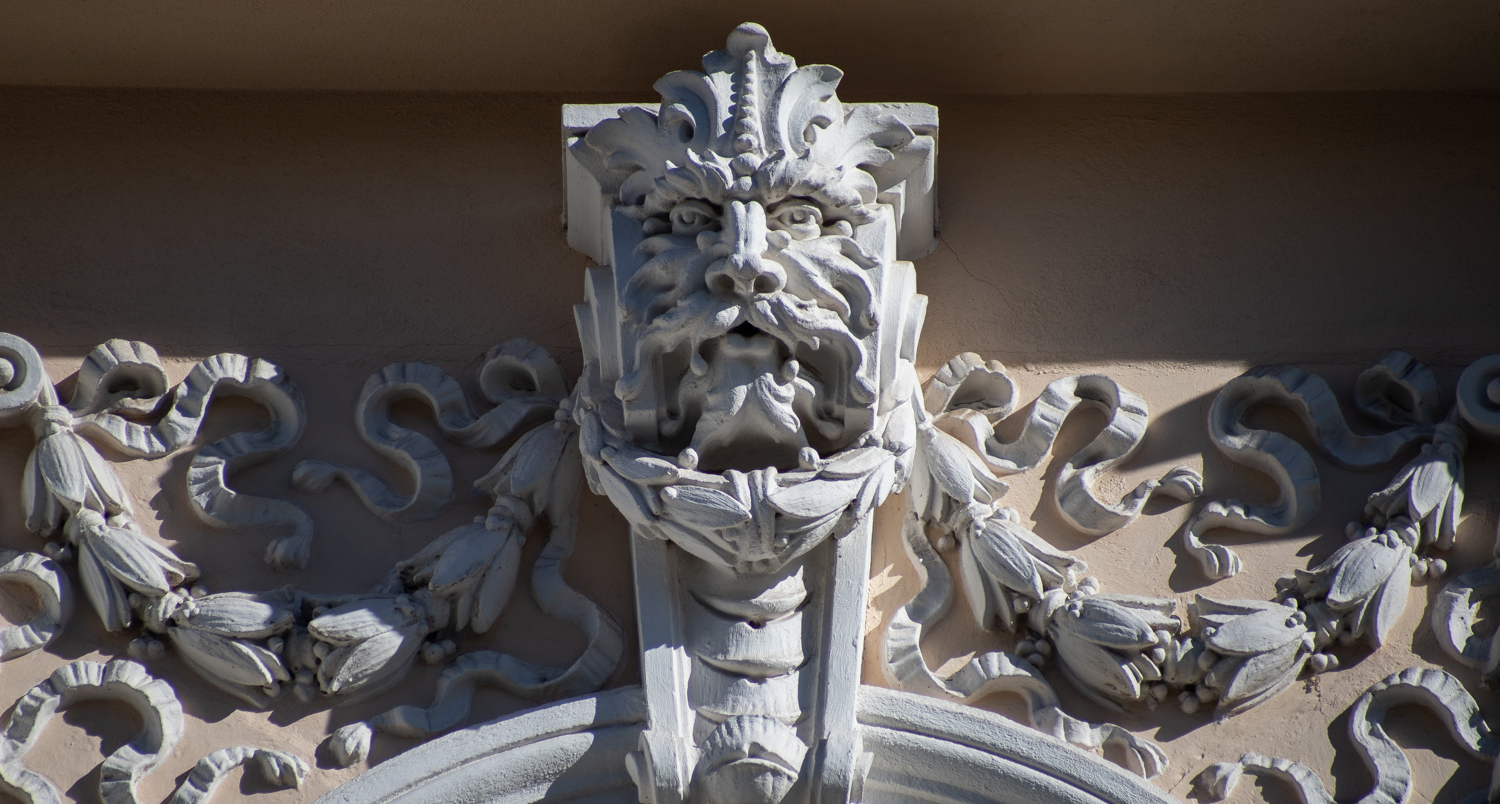
FIGURILE VEGETALE DESCOPERITE ÎN CRAIOVA
Căutările noastre după Omul Verde ne-au purtat și în Craiova, unde am întâlnit numeroase reprezentări ale figurii fitomorfe. Printre clădirile vechi scăpate de valul demolărilor, am descoperit un patrimoniu arhitectural remarcabil, cu fațade care păstrează mascheroni și decorații din secolul al XIX-lea, perfect conservate.
FIELD RESEARCH
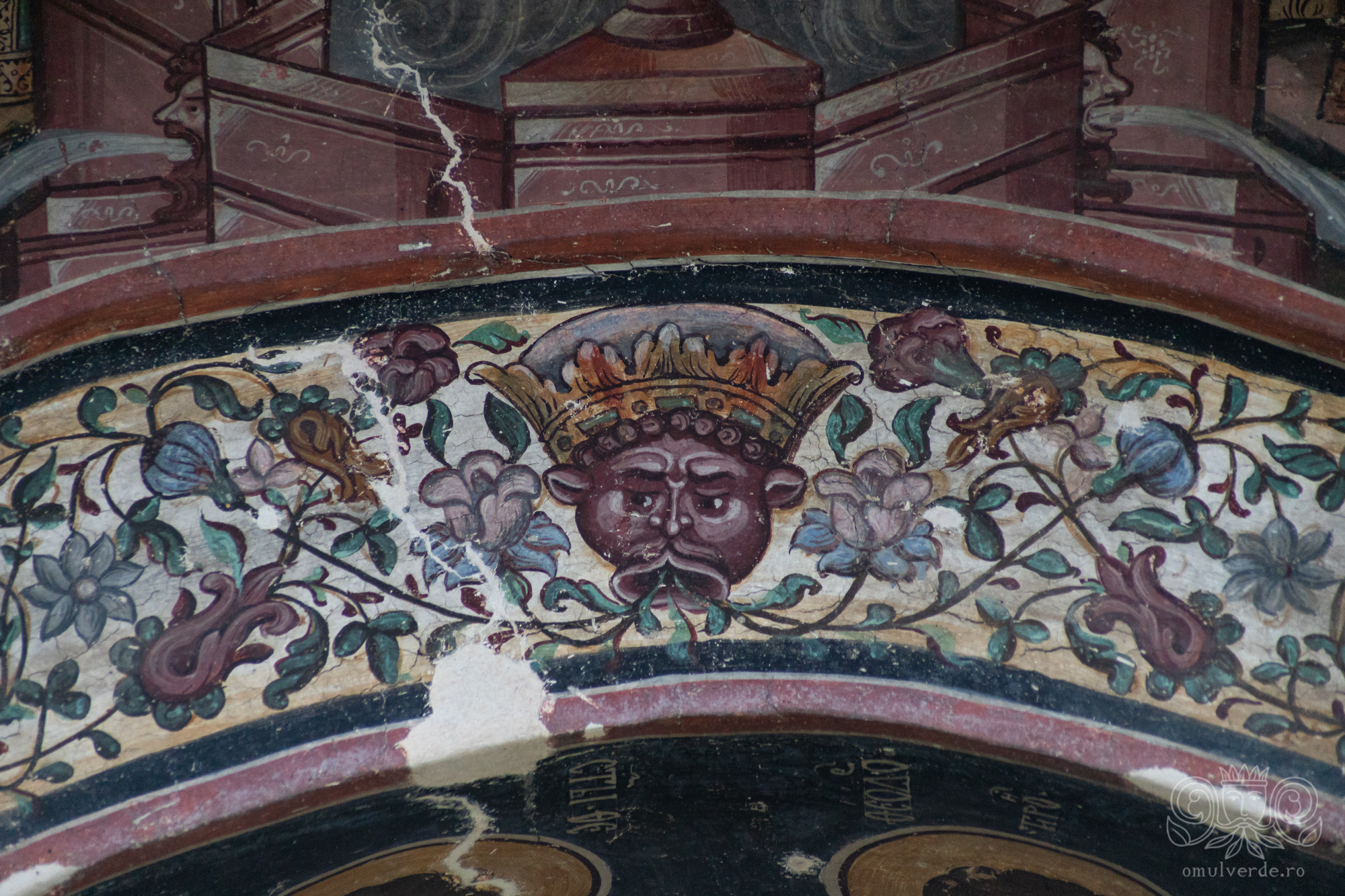
THE GREEN MAN OF HUREZI
Hurezi Monastery, located in Vâlcea County, is one of Romania’s most important and best-preserved monastic complexes. Built in the late seventeenth century during the reign of Constantin Brâncoveanu, the monastery was conceived as a place of retreat and balance, set within a wooded landscape at the foot of the Căpățânii Mountains. The site’s seclusion, tranquillity, and lush vegetation contributed to its selection and subtly shaped the character of the entire complex.
FIELD RESEARCH
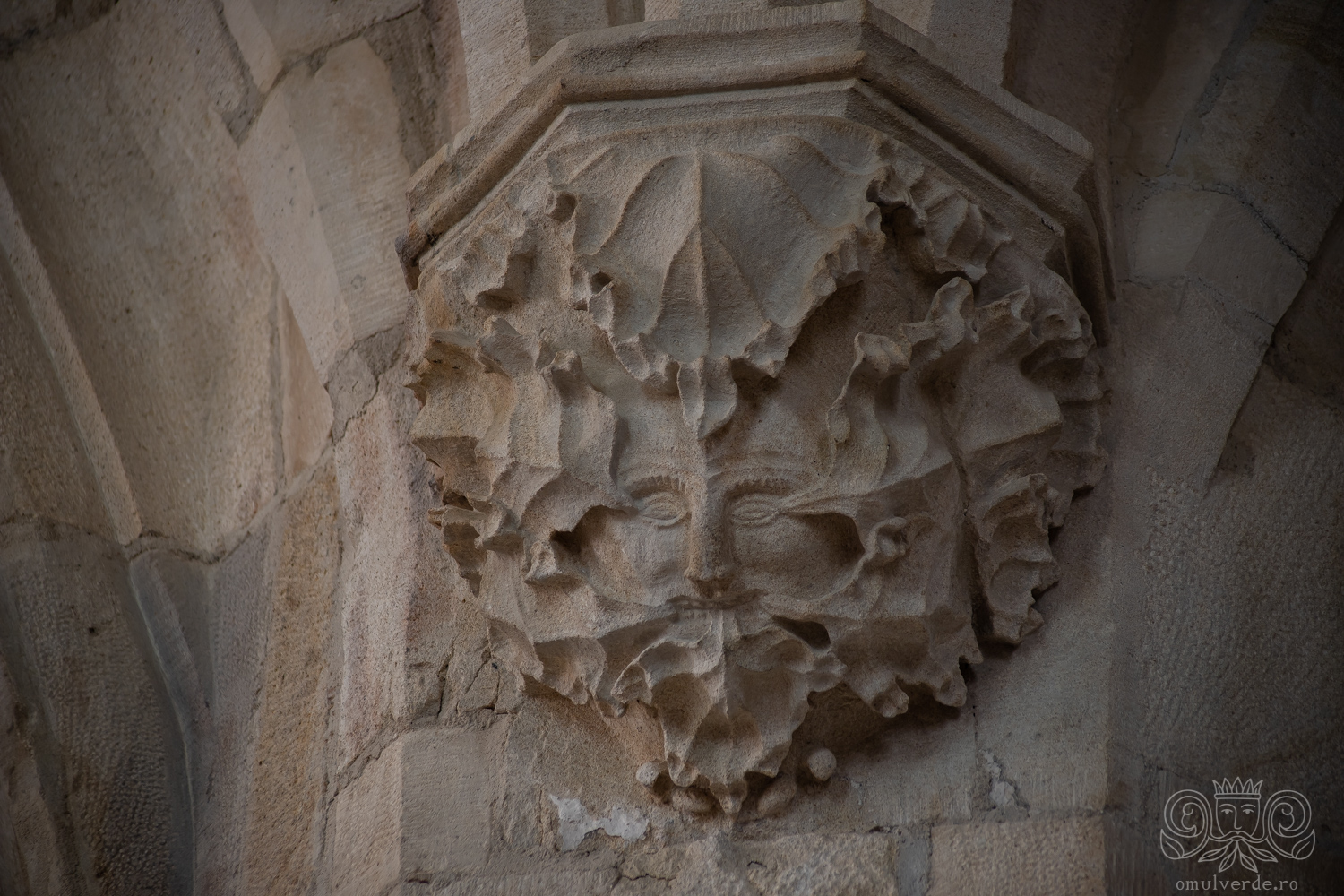
THE EVANGELICAL CATHEDRAL OF SIBIU
Inside the Evangelical Cathedral of Sibiu, architectural sculpture presents a distinctive figurative repertoire that explores the fusion of vegetal forms and the human figure. These representations are found in several parts of the church, from the nave’s vault bosses to the sedilia near the altar, inviting close observation and a slow passage through the space. sedilia altarului, cerând o observație atentă și un parcurs lent al spațiului.

FIELD RESEARCH
THE FOLIATE-HEAD CAPITAL FROM TOMIS
The National Museum of Romanian History houses a Roman capital dating from the fourth century AD and discovered at Tomis. It bears one of the earliest known representations of a foliate head—a human face directly integrated into vegetal ornament—identified to date in present-day Romania. In this piece, we can trace an early stage in the development of the Green Man motif and the emergence of an imagery of nature personified that would persist across the centuries and into the Middle Ages.


